

ERP
7 signs your business has outgrown spreadsheets — and what an ERP fixes
Spreadsheets got you here. But when month-end takes weeks and nobody trusts the stock count, it's time for a single system of record.
Almost every growing business starts on spreadsheets and a basic accounting package. They're flexible, familiar and cheap. The problem is that they don't grow with you: every new branch, product line or employee adds another file, another copy and another chance for numbers to disagree.
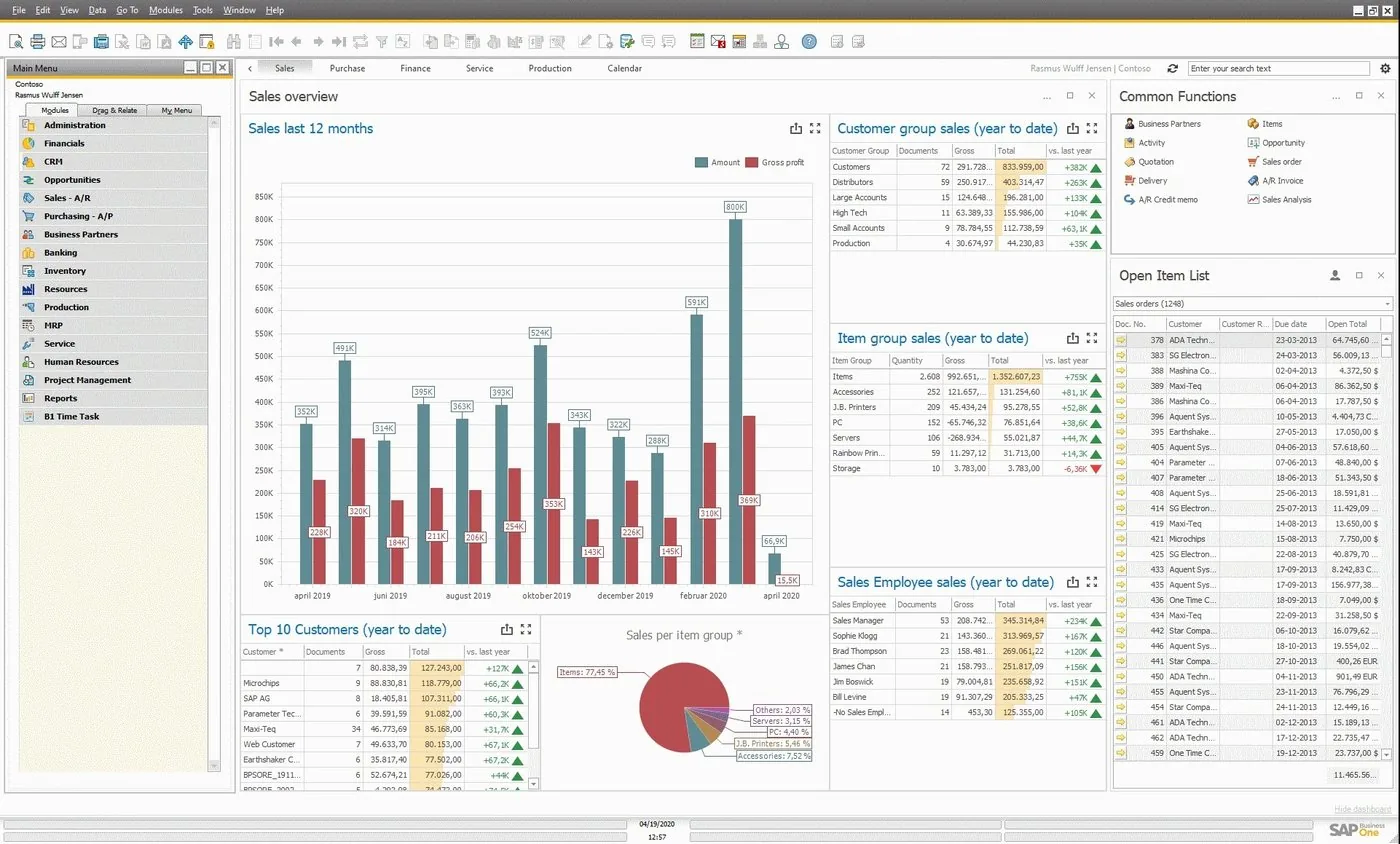
Here are the signs we see most often when a company is ready for an ERP such as SAP Business One.
1. Month-end close takes weeks, not days
If finance spends the first half of every month collecting files from sales, purchasing and the warehouse, the issue isn't effort — it's that the data lives in too many places. An ERP records transactions once, at source, so the ledger is current every day.
2. Nobody trusts the stock figure
When the system says 120 units and the shelf says 85, people stop believing reports and start counting by hand. Integrated purchasing, sales and inventory keep quantities, batches and warehouses in sync as goods move.
3. The same data is typed in three times
A sales order is written in a notebook, typed into a spreadsheet and keyed again into accounting. Each step costs time and adds errors. In an ERP, a quotation becomes an order, a delivery and an invoice without re-entry.
4. Decisions wait for reports
If leadership has to request a report and wait for someone to build it, decisions slow down. Real-time dashboards on top of one database answer everyday questions — sales by branch, margins by product, overdue receivables — instantly.
5. Approvals happen over WhatsApp
Informal approvals are fast until something goes wrong and nobody can find who approved what. Built-in approval procedures create a clear audit trail without slowing people down.
6. Opening a new branch feels like starting over
A new location shouldn't mean a new set of files. Multi-branch and multi-warehouse support lets you add sites with the same processes, controls and reporting from day one.
7. Key knowledge lives in one person's head
When only one person understands the master spreadsheet, the business carries real risk. An ERP standardises processes so knowledge lives in the system, not in someone's inbox.
The goal of an ERP isn't more software — it's one version of the truth that everyone can act on.
Where to start
- List the processes that cause the most rework today.
- Agree which reports leadership needs every week.
- Clean up item, customer and supplier master data early.
- Plan a phased go-live rather than switching everything at once.
NexBridge helps organizations implement, customize and optimize SAP Business One — from discovery and data migration to training and ongoing support. If several of these signs sound familiar, a short discovery conversation is a good next step.